Safety in Environmental Services: Our Standard for Industrial Cleaning & Field Operations
Safe, compliant services for industrial operations and emergency response.
At Ponder Environmental Services, safety is built into every job—from industrial cleaning and emergency response to hazardous waste handling and field services. Our teams operate with the training, procedures, and certifications required to protect people, assets, and the environment.
- OSHA & EPA aligned
- Certified crews & ongoing training
- Fully licensed & permitted operations
Safety Built Into Every Environmental Service We Deliver
Safety at Ponder is not a standalone program—it’s part of how we plan, execute, and complete every project. From pre-job planning to field execution, our teams follow defined procedures, maintain required certifications, and operate within strict regulatory standards.
We approach safety through:
- Engineered controls in equipment and processes
- Standardized procedures across all service lines
- Ongoing training, recertifications, and field reinforcement
This approach ensures consistency across industrial cleaning, spill response, confined space operations, and hazardous material handling.
Our Environmental Health & Safety (EHS) Framework
Our employees complete required safety training and maintain certifications relevant to industrial and environmental field operations, including:
- OSHA safety training and compliance programs
- Confined space entry and rescue training
- Hazardous materials handling and waste management requirements
- Incident Command System (ICS-100, ICS-200, ICS-700)
- Fire and field response training (S-130, S-190)
- PHMSA Operator Qualification (OQ) training
- DOT hazardous materials transportation training (HM126F, HM181, HM232)
- TWIC credentialing for secure site access
- eRailSafe certification for rail operations
Training is reinforced through ongoing refresh cycles to ensure crews remain current with evolving standards and field conditions.
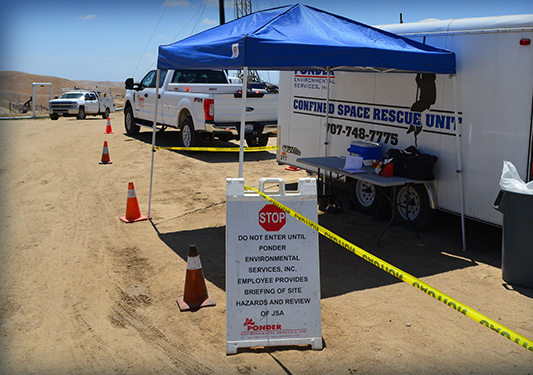
Every project follows established safety protocols, including:
- Pre-job hazard assessments
- Job Safety Analysis (JSA)
- Permit-required confined space procedures
- PPE requirements based on site conditions
- Emergency response planning and coordination
These procedures ensure that safety is addressed before work begins and maintained throughout execution.
We utilize specialized equipment designed to support safe operations in industrial environments:
- Vacuum trucks for controlled material handling
- Robotic and remote-operated systems where applicable
- Monitoring systems for atmospheric and environmental conditions
Equipment is inspected, maintained, and operated according to established safety standards.
Safety performance is reviewed regularly through:
- Incident tracking and reporting
- Internal safety reviews
- Process updates based on field learnings
This ensures that safety practices continue to evolve with operational experience.
Safety Across Our Industrial Cleaning & Environmental Services
Tank cleaning projects are completed using controlled entry procedures, atmospheric monitoring, vapor management, and equipment designed to support safe industrial cleaning operations.
Vacuum truck operators follow DOT transportation requirements, material handling procedures, and equipment inspection protocols to support safe loading, transport, and disposal operations.
Roll-off services are supported by safe loading procedures, site coordination, transport compliance, and proper waste containment practices.
Remote-operated robotic systems help reduce personnel exposure during tank cleaning operations while supporting safer and more efficient cleaning performance in industrial environments.
Temporary tank systems are managed with containment planning, placement inspections, and monitoring procedures designed to support safe environmental operations.
Our emergency response teams operate with established containment procedures, PPE requirements, and incident command coordination to safely manage releases and environmental incidents.
Hazardous materials are managed through compliant handling, packaging, transportation, and disposal procedures performed by trained personnel.
Degassing and vapor control operations utilize monitoring systems, engineered controls, and ventilation procedures to maintain safe working conditions during tank and vessel projects.
Confined space rescue teams provide standby rescue support, atmospheric monitoring, and emergency preparedness during permit-required confined space operations.
Ponder maintains the permits, registrations, and transportation procedures required to safely transport hazardous and non-hazardous materials across project sites and disposal facilities.
Industrial pressure washing and steam cleaning services are completed using controlled water management, PPE requirements, and site-specific safety procedures.
Site fencing services help support work zone control, perimeter security, and restricted access requirements across active industrial environments.
Rapid-response crews are trained to mobilize quickly while maintaining established emergency response procedures, communication protocols, and environmental compliance standards.
Mobile command center capabilities support field coordination, incident communication, operational oversight, and emergency response management during large-scale projects and incidents.
Waste profiling, compatibility reviews, transportation coordination, and disposal planning are integrated into waste management operations to support compliant handling practices.
Rail-related services are supported by rail-specific training programs, eRailSafe compliance, transportation coordination, and site access procedures required for railroad environments.
Industries
Safety Expertise Across Industrial Environments
We support a range of industries, each with unique operational and safety requirements:
- Energy – Field operations in the energy sector require strict adherence to safety protocols, equipment standards, and environmental compliance across active sites.
- Chemical – Chemical environments demand controlled handling procedures, monitoring systems, and trained personnel to manage materials safely.
- Engineering – We support engineering-driven projects with safety planning, site coordination, and compliance-focused execution.
- Pipeline – Pipeline work requires specialized training, PHMSA compliance, and operator qualification to safely perform inspection, maintenance, and response services.
- Utilities – Utility operations require coordination with active systems, controlled access, and safety procedures tailored to infrastructure environments.
- Storage Tanks – Tank-related services involve confined space entry, vapor control, and monitoring to maintain safe working conditions during cleaning and maintenance.
- Oil & Gas – Oil and gas environments require comprehensive safety procedures, hazardous materials handling, and compliance with industry-specific standards.
- Terminals – Terminal operations require coordination, traffic control, and safe handling procedures across active loading and unloading environments.
- Refineries – Refinery work involves high-risk conditions requiring strict safety controls, PPE requirements, and adherence to site-specific protocols.
- Railroads – Rail services are supported by rail-specific certifications, including eRailSafe compliance, and procedures required for working on active rail sites.
- Transportation – Transportation-related services require DOT compliance, safe material handling, and coordination across logistics operations.
- Manufacturers – Manufacturing facilities require ongoing maintenance, cleaning, and waste management services performed with minimal disruption and strict safety controls.
- Retail – Retail environments require controlled work zones, safety planning, and coordination to maintain safe operations in public-facing areas.
- Government – Government projects require compliance with regulatory requirements, documentation standards, and safety protocols across public sector work.
Our teams adapt procedures to each environment while maintaining consistent safety standards.
Compliance & Regulatory Alignment
Ponder Environmental Services operates in accordance with federal, state, and industry regulations governing environmental services and industrial operations.
This includes alignment with:
- OSHA (Occupational Safety and Health Administration)
- EPA (Environmental Protection Agency)
- DOT (Department of Transportation)
- PHMSA (Pipeline and Hazardous Materials Safety Administration)
- FRA (for rail-related operations)
We maintain required licenses, registrations, and certifications to support compliant operations.
Examples include:
- EPA Identification Number for hazardous waste activities
- PHMSA Hazardous Materials Registration
- CHP Hazardous Materials Transportation License
- Contractor licensing for hazardous materials work
Ponder participates in recognized third-party safety and compliance platforms, including:
- ISNetworld
- Avetta (formerly PICS)
- DISA
- NCMS
- Gold Shovel
- PEC Safety
These programs support transparency, documentation, and alignment with client and industry safety expectations.
Our operations are also supported by active permits and registrations required for environmental services work, including:
- Hazardous waste transportation registrations
- DOT carrier authority and compliance certifications
- State-level contractor licensing and regulatory approvals
- Medical waste management registrations
- Trench and excavation permits for field operations
- These credentials support safe, compliant project execution across service lines.
Measuring Safety Performance
We track safety performance to maintain accountability and improve operations over time.
Metrics may include:
- Experience Modification Rate (EMR)
- Total Recordable Incident Rate (TRIR)
- Internal safety tracking and reporting
Performance is reviewed regularly to ensure alignment with company standards and client expectations.
Safety Resources & Insights
We continue to develop resources to support safety awareness and education across the industries we serve.
Future resources may include:
- Industrial cleaning safety guides
- Confined space entry best practices
- Spill response procedures
- Regulatory compliance updates
Safety in Environmental Services: FAQs
What safety standards do environmental services companies follow?
Environmental services companies operate under OSHA, EPA, and DOT regulations, along with industry-specific standards for hazardous materials and industrial operations.
How do industrial cleaning companies maintain safety?
Through training, pre-job planning, PPE requirements, and controlled procedures for equipment and materials handling.
What certifications are required for hazardous waste handling?
Certifications vary but may include OSHA training, hazardous materials handling certifications, and DOT/PHMSA compliance.
What is confined space rescue?
Confined space rescue involves trained personnel and equipment prepared to respond to emergencies in restricted environments.